
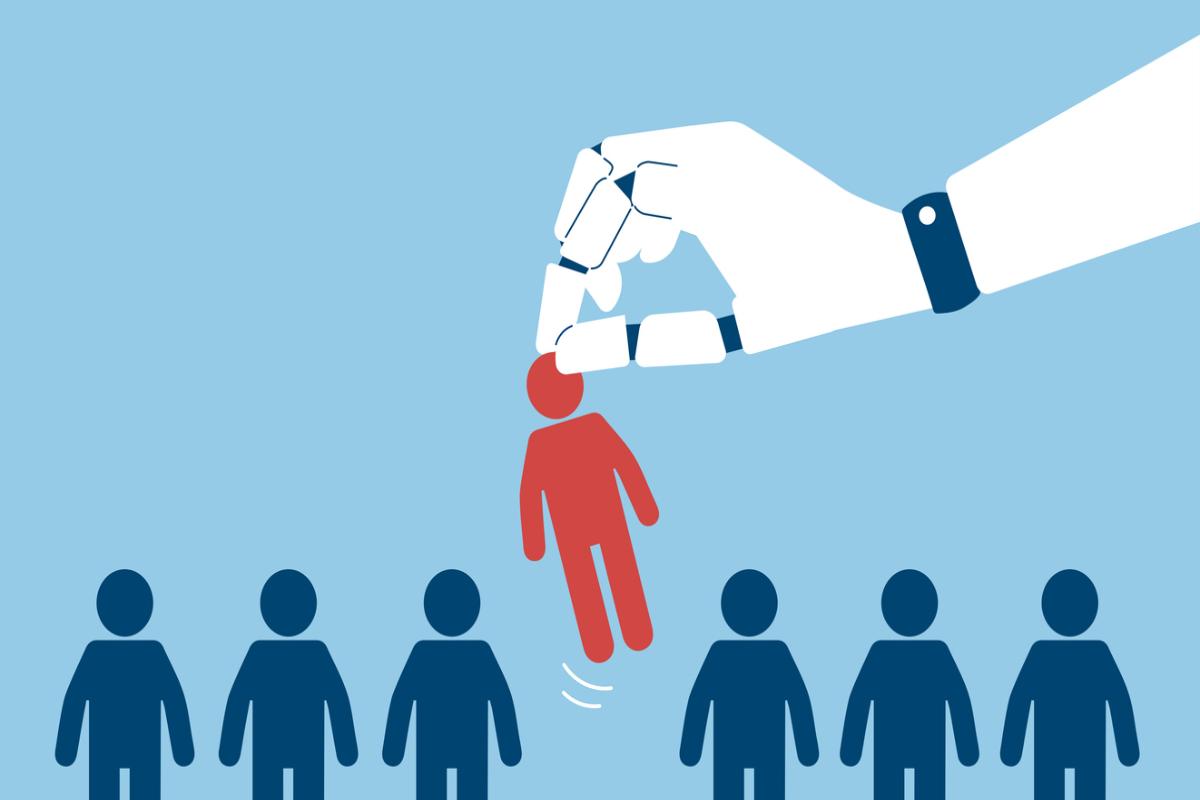
As human resources (HR) departments increasingly use artificial intelligence (AI) to automate as many functions as possible, experts on inclusion have expressed concern about its inherent biases. AI tools could introduce new biases, and the development process could also introduce bias across recruitment, hiring, and separation.
Some experts have pointed out that only a few companies create and control AI technologies. These companies’ monopoly on AI-based HR tools can lead to very specific directives about how and when those tools are used. For instance, when companies exclude certain groups from AI development, AI tools are unlikely to address their needs or represent them accurately.
Furthermore, deep learning, a type of machine learning that underpins AI tools, can also ignore groups in ways that lead to bias in hiring. For instance, pre-hiring algorithms may rate job applicant video interviews in a way that excludes certain racial groups based on the emotional cognition of their faces.
As a result, while HR personnel may find AI useful and efficient, they must also recognize the biases it can create. Unless diversity is built into the foundations of AI tools from the outset, biases are likely to show up in those tools.
HBL has experience in all areas of benefits and employment law, offering a comprehensive solution to all your business benefits and HR/employment needs. We help ensure you are in compliance with the complex requirements of ERISA and the IRS code, as well as those laws that impact you and your employees. Together, we reduce your exposure to potential legal or financial penalties. Learn more by calling 470-571-1007.