
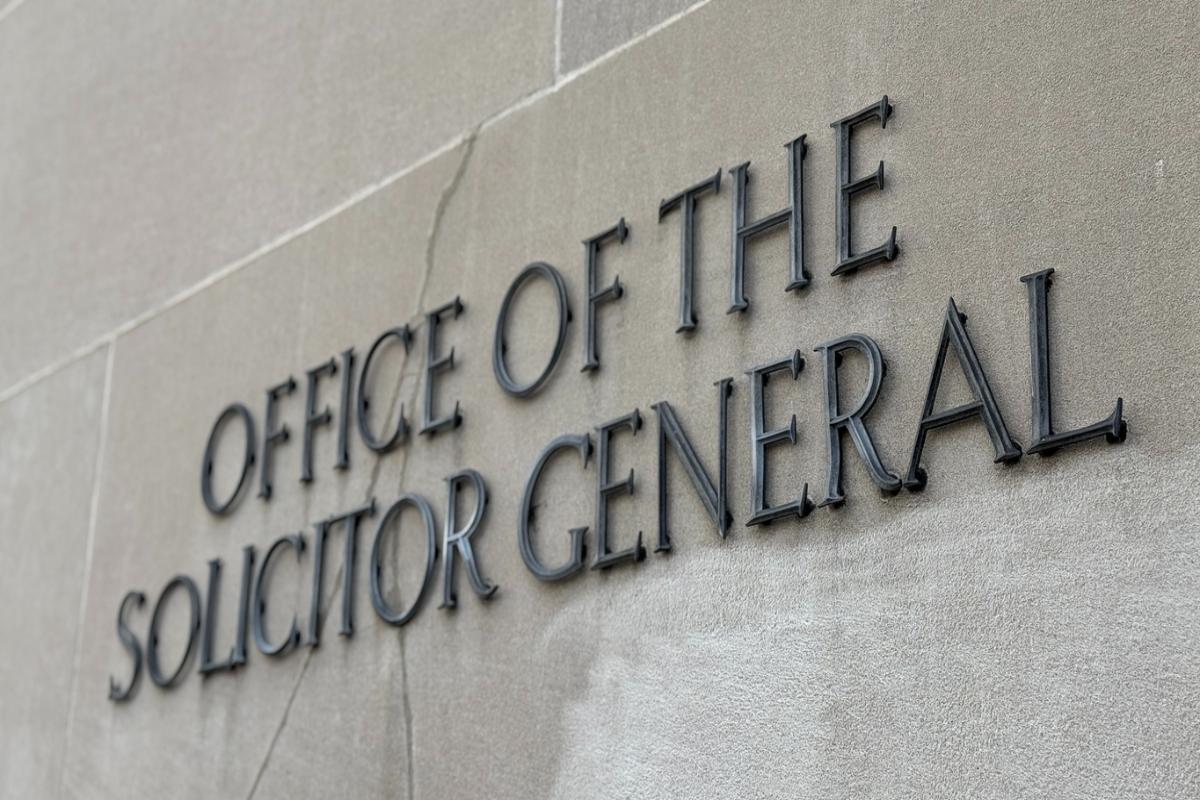
As the U.S. Supreme Court considers whether to grant a writ of certiorari in a case involving the handling of a chain restaurant’s retirement plan assets in bankruptcy, the U.S. Solicitor General is arguing that the court should decline review. According to the Solicitor General, the case’s “idiosyncratic” nature makes it inappropriate for further review, as it is unlikely to provide useful guidance for litigants and lower courts. The case is Jerry Aldridge et al. v. Regions Bank, Case Number 25-590, U.S. Supreme Court.
More than 90 former Ruby Tuesday executives allege that Regions Bank failed to protect their retirement benefits from liquidation in bankruptcy. In response, the Solicitor General characterized the case as “unsuitable” for addressing surcharge, a type of financial award under the Employee Retirement Income Security Act (ERISA). The remedy at issue is surcharge, an equitable monetary award. The plans at issue are “top-hat” retirement plans for high-earning executives.
The former executives filed a petition for a writ of certiorari in November 2025 after a three-judge panel of the U.S. Court of Appeals for the Sixth Circuit affirmed the lower court’s grant of summary judgment in favor of Regions. The appellate panel found that the workers’ request to recoup the retirement plan funds lost to bankruptcy was a claim for money damages, which ERISA does not permit. Likewise, the panel ruled that ERISA preempted the group’s state law claims, including a breach of contract claim.
In their petition, the former executives argued that reviewing the case would resolve a split among the federal courts of appeals as to whether surcharge is an available remedy under ERISA. As part of its review, the Supreme Court invited the Solicitor General to file a brief.
The Solicitor General argued that the Sixth Circuit erred in excluding surcharge as a remedy in ERISA cases, citing it as a common form of equitable relief. Although surcharge results in a monetary remedy, the Solicitor General argued, it differs substantially from damages, which the Sixth Circuit improperly conflated in its opinion. Despite the Sixth Circuit panel’s allegedly flawed analysis, the Solicitor General urged the high court to deny the certiorari petition because ERISA treats “top-hat” plans differently from other retirement plans.
The Supreme Court previously held in Cigna Corp. v. Amara that the plaintiffs could seek surcharge against a plan fiduciary under ERISA. However, unlike other retirement plans, “top-hat” retirement plans aren’t subject to fiduciary requirements under ERISA. Based on that distinction, the Solicitor General said Cigna might compel a conclusion that surcharge is not an available remedy in cases involving “top-hat” plans. The Solicitor General also noted that surcharge disputes rarely involve “top-hat” plans; therefore, the outcome wouldn’t be instructive to most litigants or courts.
The former restaurant executives filed suit against Regions in March 2021. Ruby Tuesday filed for Chapter 11 protection in October 2020, but the company is not named as a defendant in the suit. Ruby Tuesday terminated its “top-hat” retirement plans in 2019, and Regions paid out the plan assets as lump sums through the bankruptcy proceedings. A Tennessee federal district court granted summary judgment for Regions in 2024, and the ex-workers appealed to the Sixth Circuit, which affirmed the lower court’s judgment.
HBL has experience in all areas of benefits and employment law, offering a comprehensive solution to all your business benefits and HR/employment needs. We help ensure you are in compliance with the complex requirements of ERISA and the IRS code, as well as those laws that impact you and your employees. Together, we reduce your exposure to potential legal or financial penalties. Learn more by calling 470-571-1007.